 Day Trips from Guadalajara
Guachimontones Opening Hours and What You Will See There
Guachimontones opening hours, checked against INAH in September 2026, are Thursday to Sunday, 9:00 to 17:00, with entry free of charge. That schedule is a January 2026 change: older guides still quote a 30-peso ticket and a Tuesday-to-Sunday week, so a visit planned around outdated advice can arrive on a day the site is closed. Once inside, what you are looking at is Jalisco's largest pre-Columbian site, circular stepped pyramids unlike anything else within reach of Guadalajara, built by the Teuchitlan tradition roughly two thousand years ago. This guide covers the hours, the free entry, the interpretive centre next door, and how the site fits into guided days from Guadalajara that combine it with tequila country the same afternoon.
Quick answer The current hours, the price, and what the site is
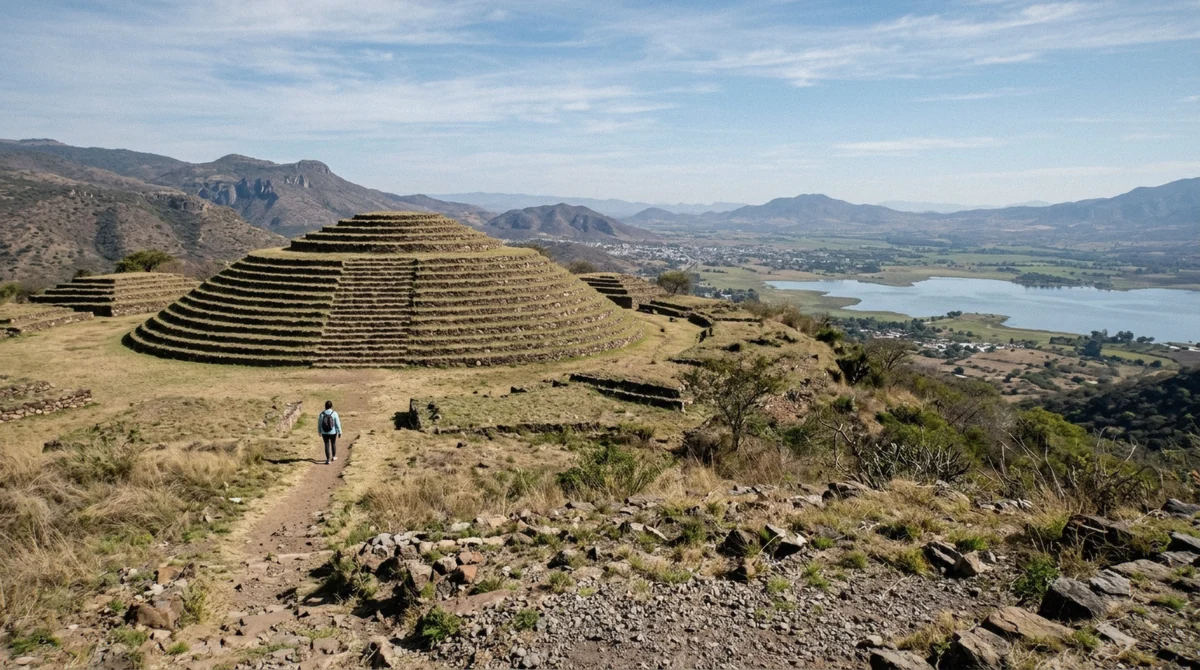
Guachimontones is open Thursday to Sunday, 9:00 to 17:00, with free entry, according to INAH's own zone page checked in September 2026; it is closed Monday, Tuesday and Wednesday. The change to a four-day week and free admission dates to January 2026, replacing the older Tuesday-to-Sunday schedule and a 30-peso ticket that many older guides still repeat. What you find inside is Jalisco's largest pre-Columbian site, its stepped pyramids built as circles rather than the rectangular platforms seen at most Mexican ruins, part of the UNESCO Agave Landscape inscribed in 2006.
Key takeaways
- Open Thursday to Sunday, 9:00 to 17:00; closed Monday to Wednesday
- Entry is free, a change that took effect in January 2026
- The stepped pyramids are circular, unique among sites reachable from Guadalajara
- Teuchitlan is about 60 km west of the city, 45 minutes to 1 hour 15 by road
- Guided half days that include Guachimontones start at $112: see the tour
- The site sits inside the tequila cost comparison for travellers combining it with a tequila day
Opening Days, Hours and Entry
The official schedule, read directly from INAH's own zone page in September 2026, and the one thing that catches people who trust an older guide. Opening days and the free entry come from the INAH zone page; the UNESCO listing is property 1209.
The current schedule
INAH notes that its published rates exclude fees third parties, such as state government or community organisations, might separately charge, so it is worth having a little cash on hand even though the federal entry itself is free.
| What | When | Price | Source |
|---|---|---|---|
| Archaeological zone | Thursday to Sunday, 9:00 to 17:00 | Free | INAH zone page, checked September 2026 |
| Closed days | Monday, Tuesday, Wednesday | Not applicable | INAH zone page |
| Interpretive centre | Reported Tuesday to Sunday, 9:00 to 17:00 | Not separately confirmed | mexicoescultura.com, reported, not the primary source |
Why older guides get this wrong
The change to free entry and a Thursday-to-Sunday week took effect in January 2026. Blog posts and even some booking pages written before that date still quote a 30-peso admission and a Tuesday-to-Sunday schedule, which was accurate then but is not now. If a source you are reading does not carry a 2026 date, treat its hours and price as unverified and check INAH's own zone page directly before planning around it.
What You Are Looking At: Circular Pyramids and the Teuchitlan Tradition
Guachimontones is not a smaller version of a site you may have already seen; the shape itself is the distinguishing feature.
Circular, not rectangular
The stepped pyramids here rise as circles, each with a raised circular patio on top and rectangular platforms arranged around the rim, a layout built by the Teuchitlan tradition roughly between 300 BCE and 450 to 500 CE. This is Jalisco's largest pre-Columbian site, and the circular form sets it apart from the rectangular step-pyramids most visitors picture when they think of Mexican ruins.
The volador ceremony and the ball court
The centre of the largest circular structure held a pole used for the volador ceremony, in which performers descend on ropes wound around a central pole, a tradition still performed elsewhere in Mexico today. The site also holds a ball court, evidence of the same Mesoamerican ball game found at sites across the region.
Part of the UNESCO Agave Landscape
Guachimontones sits inside the Agave Landscape and Ancient Industrial Facilities of Tequila, inscribed by UNESCO in 2006, as a second core zone alongside the agave fields and distilleries around Tequila itself. UNESCO's own listing describes the site as testimony to the Teuchitlan cultures that shaped the region from about AD 200 to 900 through terraces, housing, temples, ceremonial mounds and ball courts.
The Phil Weigand Interpretive Centre
A small museum sits beside the archaeological zone, named for the archaeologist whose fieldwork first mapped the Teuchitlan tradition in detail.
What it covers
The Centro Interpretativo houses artefacts, models and explanatory material on the Teuchitlan tradition, useful context before or after climbing the site itself, especially for visitors without a guide.
Its hours are reported, not confirmed
mexicoescultura.com reports the centre open Tuesday to Sunday, 9:00 to 17:00, a schedule one day wider than the archaeological zone itself, but this comes from a secondary source rather than INAH's own page and should be treated as reported rather than confirmed. If the museum is central to your visit, build in flexibility rather than fixing a plan entirely around that reported window.
How to Get There from Guadalajara
Teuchitlan sits close enough for a half-day trip, but public transport does not reach the site directly.
Distance and drive time
Teuchitlan is about 60 km west of Guadalajara, 45 minutes to 1 hour 15 by road depending on the route taken.
The DIY route
There is no useful direct public transport to the site itself. The workable DIY approach is a bus to Teuchitlan town followed by a taxi for the final stretch to the archaeological zone, which takes more coordination than the bus-to-Tequila route covered on the tequila tour cost page.
Driving yourself
For travellers renting a car, the standing advice that applies across every day trip from Guadalajara applies here too: use the toll (cuota) highways rather than the free roads where a route offers both, and keep intercity driving to daylight hours. Neither road nor site conditions here are unusual, but the general caution is worth carrying into any self-driven half day this far from the city.
Why most visitors choose a guided day
Because there is no direct bus line and the closed days can catch a self-planned trip off guard, most visitors combine Guachimontones with a guided half or full day rather than assembling the DIY route themselves.
How Teuchitlan compares with the other stops in the region
Teuchitlan sits in the same general drive-time band as the towns that make up tequila country, which is why several tours fold the two into one day.
| Destination | Distance from Guadalajara | Typical drive time |
|---|---|---|
| Teuchitlan (Guachimontones) | ~60 km | 45 min to 1 hr 15 |
| Tequila | 65 km | about 1 hr 15 |
| Amatitan | ~50 km | 45 to 50 min |
What the Visit Is Like on the Ground: Shade, Climb, Time Needed
The site rewards a visit but is not a gentle stroll, and planning for the ground conditions matters as much as knowing the hours.
No shade, uneven ground
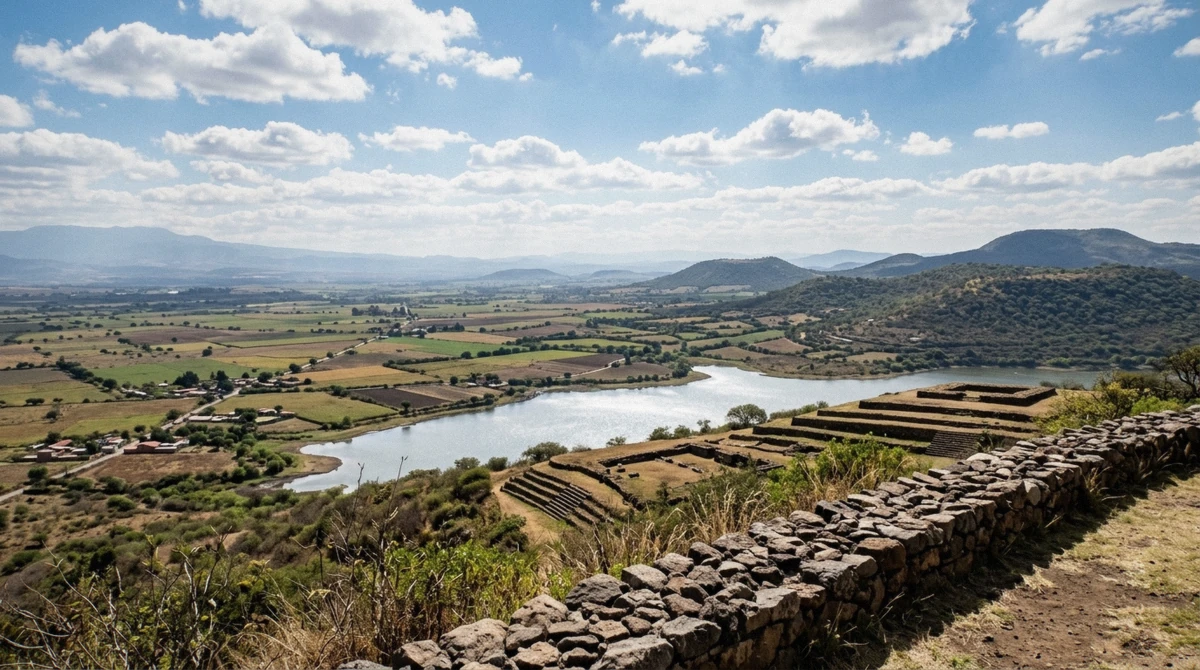
The terraces are unshaded and the ground is uneven; the walk from the car park up to the main pyramids is uphill. Sun protection, water and real footwear matter more here than at a paved, covered site.
How much time to allow
A focused visit to the pyramids themselves takes roughly an hour to ninety minutes; travellers combining the interpretive centre and a slower pace should allow closer to two hours.
Best time of day
Morning is the more comfortable window, before the midday sun is directly overhead on the shadeless terraces. Since the site now closes at 17:00 rather than a later hour, arriving by early-to-mid afternoon at the latest is the safer plan on a self-driven visit.
Rainy season conditions
Guadalajara's rainy season runs roughly June through September or October, with storms typically arriving in the afternoon and evening rather than lasting all day. On an unshaded, uneven site like this one, that pattern favours a morning visit even more strongly in those months: the ground is driest and the sky clearest before the afternoon build-up, and a delayed start in July or August, the wettest months of the year, risks the climb turning slick underfoot.
Going with a Guided Day Instead
Two real listings put Guachimontones on a fixed schedule with pickup and a driver who already knows the closed days.
The dedicated half day
The Guachimontones Circular Pyramids tour runs a 5-hour day from $112 with hotel pickup, built specifically around this one site rather than folding it into a longer itinerary.
Combined with tequila country
The Tequila and Guachimontones UNESCO Route runs a 9-hour jeep day from $124 with pickup, covering both halves of the same UNESCO inscription, the agave landscape around Tequila and the archaeological zone at Teuchitlan, in a single trip.
Why pickup matters here specifically
Because there is no useful direct public transport to the site, a tour with hotel pickup removes the one genuinely awkward logistical step of a DIY visit, the bus-plus-taxi combination to reach the zone itself.
What Else Is Nearby the Same Afternoon
Teuchitlan sits close enough to tequila country that both halves of the UNESCO listing fit into one day for travellers with a full schedule.
Tequila town
Amatitan and Tequila sit within the same general drive-time band as Teuchitlan, which is exactly why the combined UNESCO route pairs the two in a single 9-hour day rather than splitting them across separate trips.
Planning the rest of the trip
For travellers weighing a standalone Guachimontones half day against a combined day, the tequila tour cost comparison lays out the full price range across every tequila-country option, useful context before deciding whether to combine the two sites or keep them separate. It sits alongside the twelve day trips from Guadalajara ranked by length for anyone still deciding how to fill the rest of the week.
Guachimontones Visitor Questions
What are the Guachimontones opening hours?
Thursday to Sunday, 9:00 to 17:00, checked against INAH's own zone page in September 2026. The site is closed Monday, Tuesday and Wednesday, and entry is free.
Is Guachimontones worth visiting?
Yes, for the shape alone: the circular stepped pyramids here are unlike the rectangular ruins seen at most Mexican archaeological sites, and it is the largest pre-Columbian site in Jalisco. Combined with free entry since January 2026, it is a strong half-day even without pairing it with tequila country.
Is there a pyramid near Guadalajara?
Yes. Guachimontones, about 60 km west of the city near the town of Teuchitlan, is the closest significant pre-Columbian pyramid site to Guadalajara, reachable in 45 minutes to 1 hour 15 by road.
What is Teuchitlan known for?
Teuchitlan is known for the Guachimontones archaeological zone, the largest pre-Columbian site in Jalisco and the type site of the Teuchitlan tradition, whose circular stepped pyramids are found nowhere else in the region in the same concentration.
How much does it cost to visit Guachimontones?
Federal entry is free as of January 2026. INAH notes its rates exclude any fees that might be separately charged by state government or community organisations, so carrying a little cash is sensible even though the main ticket costs nothing.
Do I need a guided tour to visit Guachimontones?
No, but it helps logistically. There is no direct public transport to the site, so a self-planned visit means a bus to Teuchitlan plus a taxi for the last stretch. A guided half day with hotel pickup removes that step entirely.
Can I visit Guachimontones and Tequila in the same day?
Yes. The Tequila and Guachimontones UNESCO Route covers both halves of the same UNESCO-inscribed landscape in a single 9-hour jeep day from $124.